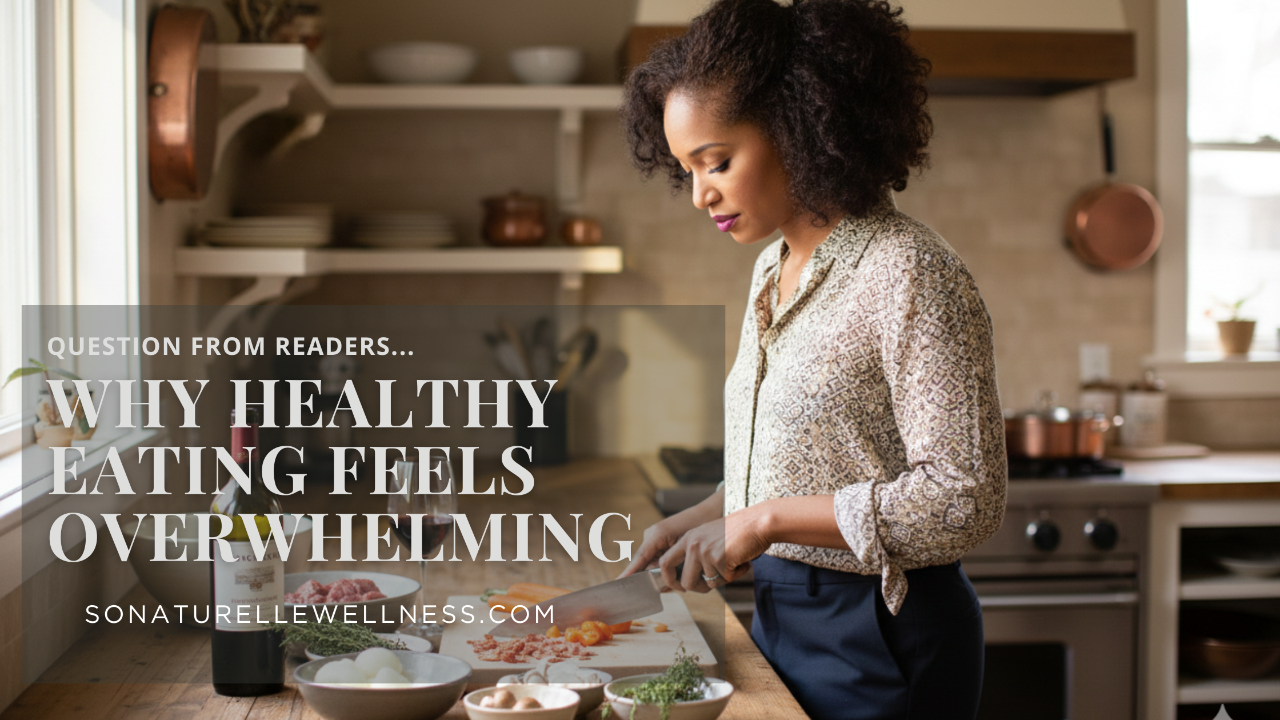
Why Healthy Eating Feels Overwhelming + Eat in Alignment With Your Body (Without Overthinking)
Jan 12, 2026If you’ve ever stood in the grocery store aisle staring at endless options for “healthy” foods—only to walk away confused, frustrated, or defeated—you’re not alone. Eating healthier sounds simple, but in a world overloaded with information (and misinformation), it can quickly feel overwhelming.
You’re told to avoid this, add that, eat superfoods, skip these carbs, embrace those fats… and suddenly what started as a simple desire—to feel good in your body—turns into mental fatigue and self-doubt.
The truth is: healthy eating feels overwhelming because modern food culture has divorced us from our own bodies. We’ve been taught to trust trends, charts, and labels instead of tuning into what our bodies actually need.
This post will help you understand why healthy eating feels so hard, how many of the foods you eat may actually be out of alignment with your body, and how to shift toward a nourishing way of eating that feels intuitive, simple, and sustainable… without overthinking it.
Why Healthy Eating Feels So Hard (Even When You Want It)
Healthy eating doesn’t feel easy because:
1. There’s Too Much Conflicting Information
Every diet influencer, health blog, and wellness app seems to tell you something different.
❌ “Carbs are the enemy!”
❌ “You must count every calorie.”
❌ “Only high-protein diets work.”
No wonder your brain gets tired! Trying to remember all these rules feels like studying for a nutrition exam you never signed up for.
2. We’re Taught to Think in Food Rules Instead of Body Signals
From a young age, most of us are conditioned to view food as:
-
Good vs bad
-
Reward vs punishment
-
Numbers on a scale vs nourishment
With that mindset, every meal becomes a test, and every slip feels like failure. It’s no wonder we feel overwhelmed.
3. Many “Healthy” Foods Aren’t Actually Serving Your Body
You might be eating foods labeled as “healthy,” but your body might not be responding well to them. Here are some examples:
-
A smoothie that’s high in sugar and leaves you crashing
-
Gluten-free snacks that are ultra-processed
-
“Low-fat” packaged foods that are full of refined additives
Just because something sounds healthy doesn’t mean it’s in alignment with your body’s unique needs.
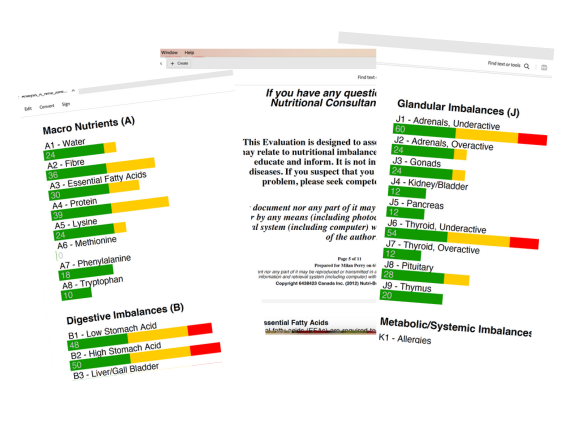
Not sure what are foods that align with your body's unique needs? Purchase your wellness blue print and let's get started on your 1-on-1 session to understand the results.
4. We Don’t Know Our Bodies Well Enough to Respond to Them
Your body is constantly communicating with you. Trouble is, most of us never learned how to listen.
Instead of noticing how foods make us feel, we pay more attention to:
✔️ Diet trends
✔️ What worked for someone else
✔️ What the latest guru says
When you aren’t tuned into your body, eating healthy will always feel like guesswork.
4. We Don’t Know Our Bodies Well Enough to Respond to Them
Your body is constantly communicating with you. Trouble is, most of us never learned how to listen.
Instead of noticing how foods make us feel, we pay more attention to:
✔️ Diet trends
✔️ What worked for someone else
✔️ What the latest guru says
When you aren’t tuned into your body, eating healthy will always feel like guesswork.
What “Eating in Alignment With Your Body” Really Means
Eating in alignment with your body is not a fad diet.
It’s a personalized way of eating that honors:
✨ Your digestion
✨ Your energy levels
✨ Your food preferences
✨ Your lifestyle
✨ Your health goals
Instead of asking, “What should I eat?”, aligned eating asks:
👉 What does my body respond well to?
👉 Which foods make me feel energized rather than bloated, sluggish, or foggy?
👉 How can I nourish myself without overthinking every decision?
When you eat in alignment with your biology and day-to-day rhythms, eating healthier becomes less about rules and more about feelings and results.

Signs Your Current Foods May Not Be in Alignment With Your Body
Here are some common signals that certain foods might not be serving your body well:
• You Feel Tired After Meals
Eating should fuel you, not put you to sleep.
• You Experience Bloating or Digestive Discomfort
Gas, bloating, cramps—these are your body’s way of saying, “We need a better plan.”
• You Crave Sugary or Salty Foods Constantly
Cravings can be hormonal, stress-related, or a sign of imbalance—not a lack of willpower.
• Your Mood Fluctuates After Eating
Certain foods can spike your blood sugar and then crash it, affecting your mood dramatically.
• You Feel Confused About What to Eat Next
If meal planning feels like a chore or a stress-inducing decision, something needs to change.
These aren’t failures—they’re feedback. And your body wants to be listened to.
How to Eat in Alignment With Your Body Without Overthinking It
You don’t need a complicated system or a shelf full of supplements to eat well. What you need is a framework that simplifies your choices and boosts your confidence.
Here’s a simple approach to get started:
1. Notice How You Feel After Eating
Before you label a food as “good” or “bad,” check in with your body:
-
Do you feel energized?
-
Do you feel uncomfortable or tired?
-
Did that meal keep you satisfied until your next snack?
This simple awareness is the foundation of aligned eating.
2. Start With the “Rule of Three”
At each meal:
✔️ Aim for a protein
✔️ Add healthy fats
✔️ Include fiber (vegetables, fruits, whole grains)
This combo supports balanced blood sugar, better digestion, and long-lasting energy—without a nutrition degree.
3. Choose Quality Over Perfection
Healthy eating doesn’t mean perfect eating.
Swap this:
❌ Packaged low-fat yogurt with artificial sweeteners
For this:
✔️ Whole Greek yogurt with fresh berries and a drizzle of honey
Your body—and your taste buds—will thank you.
4. Eat with Awareness, Not Judgment
Eating aligned isn’t about restrictions. It’s about listening.
When you eat slowly, mindfully, and without distraction, your body tells you when it’s satisfied—not stuffed.
5. Track What Works (Without Stressing About It)
Instead of calorie counting, try a simple journal:
🍽️ What you ate
💤 How you felt afterward
⚡ Your energy levels
😌 Digestive comfort
Over time, patterns emerge. You’ll start to naturally know what foods feel good for you.
Why Most Diets Fail (And Why Aligned Eating Works)
Most diets focus on rules:
-
Eat this
-
Don’t eat that
-
Count this
-
Track that
They ignore something far more important: your individual biology.
Aligned eating works because:
🔹 It’s personalized
🔹 It’s flexible
🔹 It honors your body’s signals
🔹 It doesn’t punish you for eating
Instead of asking, “How can I resist food?” you learn to ask, “How can I choose food that feels right for me?”
That shift alone reduces stress, improves digestion, and makes healthy living feel like a lifestyle, not a battle.
Real Women, Real Changes
Women who embrace aligned eating often report:
✨ Increased energy
✨ Reduced cravings
✨ Better sleep
✨ Improved digestion
✨ More confidence in food choices
✨ A calmer relationship with eating
This isn’t about perfection. This is about feeling at home in your body again.
How to Know You’re Making Progress
Here are some subtle shifts that show you’re moving in the right direction:
✔️ You reach for whole foods more often
✔️ You notice when you’re truly hungry—not bored
✔️ You stop labeling foods as “good” or “bad”
✔️ You feel more in control, not ruled by cravings
✔️ You enjoy meals without guilt
These are the real markers of successful eating—not a number on a scale.
My Final Thoughts: You Don’t Have to Figure It All Out Alone
Healthy eating doesn’t have to be confusing, stressful, or overwhelming.
You deserve a way of eating that feels natural, energizing, and sustainable—without endless rules or brain fog.
It’s not about perfection.
It’s about harmony: between your food, your body, and your life.
Want Personalized Guidance to Eat in Alignment With Your Body?
If you’re ready to stop the guesswork and start feeling confident in your food choices, I invite you to explore the Thrive & Glow Blueprint.
➡️ Thrive & Glow Blueprint is designed to help you:
🌿 Understand how your body responds to foods
🌿 Identify what nourishes you (without dieting)
🌿 Reduce overwhelm and decision fatigue
🌿 Create a personalized plan that works with your body, not against it
Click here 👉 The Thrive And Glow Wellness Blue Print to get started and unlock your best self.
Your body already knows the way—sometimes it just needs a little help to be heard.